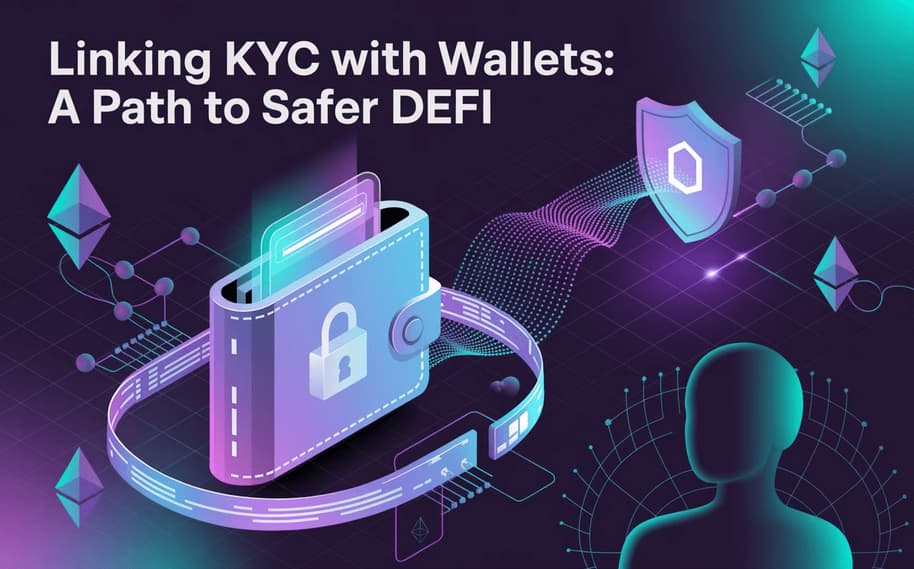
The rapid rise of decentralized finance (DeFi) has ushered in a new era of financial innovation, enabling peer-to-peer transactions without intermediaries. However, this freedom comes with a significant downside: the anonymity of users often creates a haven for fraud, money laundering, and illicit activities. Integrating Know Your Customer (KYC) procedures directly with crypto wallets offers a promising solution to mitigate these risks. By tying verified identities to wallet addresses—without compromising user privacy through advanced tools like zero-knowledge proofs—platforms can strike a balance between decentralization and regulatory compliance. This approach could build greater trust among users and institutions alike, encouraging broader participation in DeFi ecosystems.
Moreover, wallet-linked KYC systems can help facilitate seamless compliance across jurisdictions while maintaining user autonomy. Such systems allow platforms to offer tiered services, granting advanced features only to users who complete certain levels of verification. This model not only enhances platform security but also attracts institutional players who demand regulatory clarity and reduced counterparty risk. Similar to how traditional platforms like Exness MT4 offer identity verification for secure trading, DeFi protocols adopting wallet-KYC integration can provide a safer environment without undermining core decentralized principles. As regulators increasingly focus on DeFi, such proactive security measures may become essential for the sector’s sustainable growth.
Overview of KYC
Know Your Customer (KYC) is a fundamental process used by financial institutions and other regulated entities to verify the identity of their clients. The primary objective of KYC is to prevent illicit activities such as money laundering, terrorist financing, identity theft, and financial fraud. By requiring individuals and businesses to provide identification documents—such as passports, utility bills, or business licenses—organizations can ensure that their clients are who they claim to be, and that their financial activities are legitimate.
KYC typically involves several stages: Customer Identification, where personal details and identity documents are collected; Customer Due Diligence (CDD), which assesses the customer’s risk level; and Ongoing Monitoring, where transactions are continually reviewed for suspicious behavior. In many jurisdictions, KYC compliance is not just a best practice—it’s a legal requirement enforced by regulators. While traditionally associated with banks and brokerage firms, KYC is becoming increasingly relevant in the digital asset space, including cryptocurrency exchanges and DeFi platforms, as regulators push for stronger oversight of decentralized finance.
The Current State of DeFi
Decentralized Finance (DeFi) has rapidly evolved into one of the most transformative movements in the blockchain space. By leveraging smart contracts on platforms like Ethereum, DeFi eliminates the need for traditional financial intermediaries, allowing users to lend, borrow, trade, and earn yields in a permissionless and trustless manner. The total value locked (TVL) in DeFi protocols once surged into the hundreds of billions, showcasing both the potential and appetite for decentralized alternatives to banking and investing. Protocols such as Uniswap, Aave, and MakerDAO have become cornerstones of this ecosystem, offering innovative solutions that function purely on code, transparency, and community governance.
However, DeFi’s strengths are also its greatest vulnerabilities. The open and anonymous nature of these protocols creates a fertile ground for malicious actors. High-profile hacks, rug pulls, and exploits have resulted in billions of dollars in losses, eroding user trust and drawing the attention of regulators worldwide. Furthermore, the lack of identity verification makes it difficult to trace bad actors or enforce legal accountability. While the DeFi space continues to expand and innovate, the absence of standardized compliance measures like Know Your Customer (KYC) procedures remains a major barrier to mainstream and institutional adoption. As a result, the current DeFi landscape is both a technological marvel and a regulatory grey zone, teetering between freedom and risk.
Wallet-Based KYC: A Technical and Conceptual Framework
The concept of wallet-based KYC represents a forward-thinking attempt to bridge the gap between DeFi’s permissionless architecture and the growing demand for regulatory compliance. At its core, this framework involves linking a user’s identity—verified through traditional KYC processes—with their cryptocurrency wallet, creating a digital identity layer that can be used across decentralized applications (dApps). Unlike centralized exchanges where user data is stored and controlled by a single entity, wallet-based KYC can leverage decentralized identity (DID) systems, allowing users to maintain control over their own credentials while selectively disclosing information as needed.
| Key Component | Description |
| Digital Identity Integration | Link verified KYC information to blockchain wallets.Create a persistent, reusable identity across DeFi protocols. |
| Decentralized Identity (DID) | Users control their own identity data.Stored locally or on decentralized networks (e.g., IPFS, Ceramic). |
| Verifiable Credentials | Issued by trusted authorities (e.g., KYC providers, institutions).Can be cryptographically validated without exposing personal data. |
| Zero-Knowledge Proofs (ZKPs) | Prove compliance (e.g., age, citizenship, sanctions list) without disclosing sensitive info.Maintain user privacy while meeting regulatory needs. |
| Selective Disclosure | Users choose what information to share and with whom.Enables minimal compliance with maximum privacy. |
| Smart Contract Compatibility | dApps can require KYC-verified wallets for access to certain features (e.g., higher yield, governance).Promotes modular, permissioned participation. |
| On-Chain Attestations | Public or semi-public proof that a wallet has passed KYC checks.Does not include personal information—only a binary status or credential hash. |
| Interoperability Across Protocols | One KYC-verified wallet can interact with multiple dApps.Reduces redundant onboarding across platforms. |
| Privacy-Preserving Compliance | Aligns with global regulatory standards without creating honeypots of user data.Enhances both trust and security. |
| User Autonomy and Control | Ensures that DeFi remains user-first and decentralized at its core.Avoids centralized data storage and single points of failure. |
Benefits of Linking KYC with Wallets
Here is a detailed list of the benefits of linking KYC with crypto wallets, particularly in the context of enhancing the safety and scalability of decentralized finance (DeFi):
Improved Security and Fraud Prevention
- Reduces the likelihood of scams, phishing, and rug pulls by associating wallet activity with verified identities.
- Deters repeat offenders and bots from exploiting DeFi protocols.
Regulatory Compliance
- Helps DeFi platforms align with anti-money laundering (AML) and counter-terrorist financing (CTF) requirements.
- Facilitates cross-border legal adherence without compromising decentralization principles.
Institutional Onboarding
- Lowers entry barriers for banks, hedge funds, and fintechs seeking exposure to DeFi.
- Meets the identity verification standards expected by regulated institutions.
Reputation and Trust Building
- Verified wallets can develop on-chain reputations, enabling trust-based lending, partnerships, and governance participation.
- Encourages more responsible behavior among users.
Access Control and Tiered Services
- Enables differentiated service levels (e.g., higher withdrawal limits or premium features) based on identity verification status.
- Allows developers to create compliant products without excluding anonymous users completely.
Interoperability Across dApps
- One KYC-verified wallet can be used across multiple platforms, streamlining the user experience.
- Reduces repetitive onboarding and redundant KYC processes.
Privacy-Preserving Identity Systems
- Uses technologies like zero-knowledge proofs and verifiable credentials to maintain user privacy while proving compliance.
- Avoids centralized storage of sensitive personal data.
Enhanced Governance Integrity
- Prevents Sybil attacks in DAOs (Decentralized Autonomous Organizations) by ensuring that each vote is linked to a verified, unique user.
- Supports fair and transparent community decision-making.
Greater Market Legitimacy
- Demonstrates a willingness by the DeFi sector to self-regulate and collaborate with lawmakers.
- Builds public and governmental trust in blockchain financial systems.
Enabling Legal Recourse
- In case of theft, fraud, or disputes, verified identity links can assist in legal processes without requiring full disclosure of sensitive data.
Conclusion
As decentralized finance continues to reshape the global financial landscape, the integration of KYC with crypto wallets stands out as a practical and forward-looking solution to one of DeFi’s most pressing challenges: user safety and regulatory compliance. By tying verified identities to wallet addresses—without compromising the core principles of decentralization—DeFi protocols can foster trust, deter malicious actors, and attract institutional capital.
Through technologies like decentralized identity (DID) systems and zero-knowledge proofs, it’s possible to create a privacy-preserving framework that balances user autonomy with accountability. This hybrid approach not only strengthens the integrity of DeFi ecosystems but also paves the way for broader adoption by meeting the evolving expectations of both users and regulators. Ultimately, wallet-linked KYC is not about centralizing DeFi—it’s about making it sustainable, secure, and scalable for the long term.